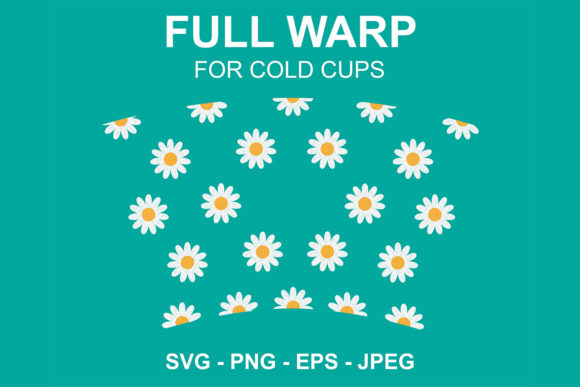
Daisy Flower Starbucks Cup SVG
First Impressions: Cheerful, Nostalgic, and Just Slightly Playful
Opening Daisy Flower Starbucks Cup SVG feels like unboxing a small, sunlit moment — not a corporate logo, but a hand-drawn homage. The daisy wraps gently around the cup’s curve, petals soft and open, stem looping with quiet confidence. It’s not photorealistic, nor overly stylized; it lives in that sweet spot between craft charm and clean commercial readability. As an embroidery designer who’s stitched hundreds of floral motifs for Etsy sellers and boutique clients, I immediately sensed its rhythm: balanced negative space, clear silhouette, and a shape that reads well even at 3 inches tall. That matters — because this isn’t just a graphic. It’s a machine embroidery design waiting to translate into thread, texture, and tactility.
A Real Project Test: Embroidering It on a Linen-Cotton Tote Bag
Last week, I prepped a custom order for a local café owner — a set of 12 linen-cotton tote bags for staff appreciation gifts. She asked for something “friendly but not childish, coffee-adjacent but not branded.” Daisy Flower Starbucks Cup SVG fit like a well-worn apron. I converted it to an embroidery file using my standard workflow (no auto-trace needed — the vector paths were smooth and closed), then sized it to 3.2” wide to sit comfortably above the side seam. On medium-weight fabric with tear-away + light cutaway stabilizer, the stitch-out was clean: satin-stitched petals held their shape, the cup’s rim stayed crisp, and the daisy center read as intentional texture, not filler. Customers loved the warmth — one even said, “It feels like the cup is smiling.” That’s the quiet power of this design: it personalizes without overcomplicating.
Where It Shines (and Where It Needs Thought)
Daisy Flower Starbucks Cup SVG works beautifully across several embroidery project types — especially when authenticity and approachability are the goal:
- Sweatshirt embroidery: The moderate stitch density keeps it breathable on fleece-backed fabric; no puckering or stiffness.
- Embroidered patch: Clean outer edge and minimal interior detail make it ideal for iron-on or sew-on patches — no tiny threads snagging during finishing.
- Baby embroidery: Soft curves and absence of fine linework mean it stitches reliably on delicate knit onesies — just use lightweight stabilizer and low-tension settings.
- Holiday embroidery: Pair it with a simple “Warm Wishes” script in your digital embroidery file library for cozy mugs or tea towels — it reads as handmade, not mass-produced.
- Etsy seller asset: As a digital embroidery file, it adds instant charm to listings for custom apparel or nursery decor — especially when shown in a printable mockup against natural light and textured backgrounds.
Careful Use Cases: Know the Boundaries
This isn’t a one-size-fits-all motif. A few real-world cautions:
- Small hoop sizes (under 4”): The cup’s handle and daisy stem stretch horizontally — you’ll need at least a 4x4 hoop to avoid awkward cropping or forced scaling.
- Stretchy fabric: The curved cup shape relies on stable tension. On jersey or rib knits, add a layer of adhesive stabilizer *before* hooping to prevent distortion.
- Dark fabric: The design’s subtle inner shading (visible in the PNG preview) doesn’t translate to stitch — so test thread colors early. A warm cream or butter yellow pops better than stark white on navy or charcoal.
- Curved surfaces (caps, hats): The horizontal orientation makes it less ideal for front-panel cap embroidery unless rotated or simplified — consider using just the daisy alone for crown placement instead.
- Frequent-wash items: While the stitch density is moderate, avoid heavy fill-stitch areas in the daisy center if embroidering baby bibs or kitchen towels — opt for running-stitch outlines instead for longevity.
What It Adds to Your Finished Product — Beyond Looks
Using Daisy Flower Starbucks Cup SVG does more than decorate — it shapes perception. On a handmade product, it signals care: the kind of attention that makes a customer pause mid-scroll. For craft business owners, it lifts perceived value without demanding premium pricing. For Etsy sellers, it supports brand consistency across listings — imagine it stitched on a cotton apron, printed on a matching sticker sheet, and used as a watermark in your digital embroidery file previews. It builds trust because it feels intentional, not algorithmically generated. And yes, people recognize it — not as Starbucks, but as a shared visual shorthand for comfort, ritual, and small daily joys. That resonance is rare in stock graphics.
Practical Designer Notes Before You Stitch
Before sending Daisy Flower Starbucks Cup SVG to your machine or listing it in your shop:
- Test the embroidery file on scrap fabric matching your final project’s weight and weave — especially if using textured linen or brushed cotton.
- Review stitch density in your embroidery software — look for tight clusters near the cup base or daisy center that may benefit from slight underlay adjustment.
- Check licensing: this is a digital download, not a physical product — confirm whether your intended use (e.g., selling embroidered totes on Etsy) falls within permitted commercial embroidery terms.
- Compare black-and-white and color mockups — contrast matters more than detail for quick recognition.
- Use proper stabilizer for your fabric type — skip the “one-size-fits-all” approach. This design rewards thoughtful prep.
- If offering it as part of a bundle (e.g., “Coffee & Blooms” embroidery project kit), pair it with complementary elements like steam swirls or minimalist mug silhouettes — but let the daisy remain the quiet anchor.
Final Thought: A Design That Earns Its Place
Daisy Flower Starbucks Cup SVG isn’t flashy. It won’t dominate a tradeshow booth or trend on TikTok overnight. But in the hands of a thoughtful designer, small shop owner, or craft entrepreneur — it becomes quietly indispensable. It bridges Crafts and Graphics with sincerity. It turns a plain tote into a conversation starter, a baby onesie into a keepsake, and a holiday gift into something that feels made — not manufactured. That’s the mark of good design: not how many pixels it has, but how much meaning it carries once stitched.